Tuesday, 23 December 2008

Nusa Dua, Bali Island

Bali's most prestigious resort area, Nusa Dua is where the tourists will find international world, class luxury hotels elegantly lining beautiful white sands. Located on the Bukit peninsula, in the southern part of Bali, approximately 10 km from the international airport. It is quiet and exclusive with superb facilities. Crystal clear water and stretches of white sandy beach of Nusa Dua makes Nusa Dua a perfect spot for luxurious resorts to which exhausted the bodies, after a Barong performance at Batubulan and a long climb of the steps of the Mother Temple Besakih, will want to rest. Some of the most sumptuous and luxurious hotels in the world find their home in Nusa Dua Bali. We can tee off into the sunset, while watching the gentle waves come from the blue sea and caress the banks surrounding the luscious greens. Tranquil swimming pools under the coconut trees seem to be one with the distant blue sea. Art galleries and numerous shops surround them.


Nusa Dua is really about taking it easy and relaxing in total luxury. As most of the hotels are 5 stars, every comfort is at our disposal as well as a gorgeous white sand beach. Nusa Dua was designed for the luxury conscious with a heavy concentration of big name hotels lining the beautiful white sand beach. The kind of activities on offer gives a flavor of Nusa Dua. The Bali Golf and Country Club, an immaculately landscaped 18 holes ocean view course. The Bali International Lawn Tennis & Lawn Bowls Club next to the Galleria Nusa Dua a spacious shopping mall with boutiques and up market restaurants. Close by Chandra Koka Amphitheatre provides a venue for traditional entertainment including arts festivals like the Nusa Dua Arts and Culture Festival. Stroll to the northern end of Nusa Dua for parasailing, jet skis, snorkeling/diving trips or better still, head for Tanjung Benoa.
Some of the resorts have private beaches but most areas are accessible. The stretch past the Hilton Resort has been a public beach and during the wet season, the outer reef there is a popular surf break. At present we will find some simple warungs selling good food at cheap prices along this beautiful stretch of white sandy beach that offers excellent swimming conditions in a protected lagoon.


Friday, 19 December 2008

Merapi Volcanoe

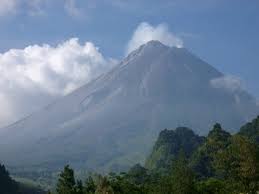
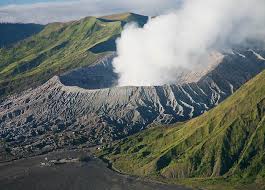
Merapi volcano is one of the world's most active and dangerous volcanoes. It contains an active lava dome, which regularly produces pyroclastic flows. It has been active for 10,000 years. This fire mountain remains one of the most active and dangerous volcanoes in the world. It can be seen from its name; Merapi from Javanese word 'Meru' means 'Mountain' and 'Api' means 'fire'. The internally giant smoking Mount Merapi is one of the active volcanoes that found in Indonesia. It is presenting its peaceful and sleepy dense forest.


Beyond this, there lies a vast deserted land with its deep and steep valley spread out among the mountain hills where sibilant pines and wild grass make out the dominating vegetation, all presents a very exciting panorama. Merapi is located about 30 km north of Yogyakarta, a city with a population of 500,000. It is tall (2.8 km or 1.7 miles high) and has steep slopes. The top of the volcano sometimes has a normal crater, but usually a broad mound of pasty lava (called a dome) fills the crater. The dome plugs up the volcano, making it difficult for other lava and ash to escape. A broad gouge funnels lava and ash flows from the top of Merapi to the south slopes of the volcano.

Monday, 15 December 2008

The Palace of Yogyakarta

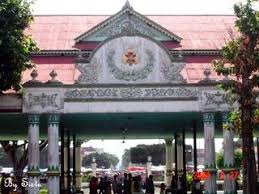
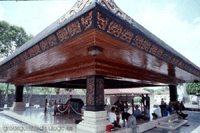
The palace court with its grand and elegant Javanese architecture lies in the center of the city. Prince Mangkubumi founded the palace in 1755. The Prince then was called Sri Sultan Hamengkubuwono I and he chose the right location of the compound between Winongo River and Code River. The palace stretches out from north to south. The front yard is called alun-alun Utara (the North Square), and the back yard is called Alun-alun Selatan (the South Square). The layout of the buildings shows that the Palace, the commemorative column and Mount Merapi lie in one line. The palace meeting hall is called Pagelaran, where formal meetings of palace officials are held, while the "Manguntur Tingkil" hall is the place where the Sultan is seated.

The visitors can enjoy the atmosphere of the kraton in former times by visiting the life-size diorama of wedding ceremonies on the palace meeting hall, performed by puppets, which are intentionally arranged to create such an atmosphere. Sets of Javanese musical instruments, antiques and heirlooms have made the palace of Yogyakarta worth to visit. Many sets of gamelan music instruments, antiques, and heirlooms make the palace of Yogyakarta the most interesting tourist attractions in Yogyakarta. The palace of Ngayogyokarto Hadiningrat is now the dwelling place of Sultan Hamengku Buwono X and the family.

Friday, 12 December 2008

Kuta Beach, Bali Island

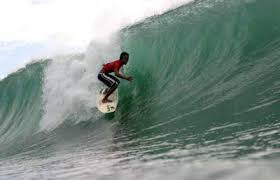
Once a lonely little village on the road from Denpasar to Bukit Peninsula, Kuta is now the tourist Mecca of Bali, popular mainly among the young and adventurous. Kuta beach is one of the first favorite beaches discovered by tourist. Coconut trees line the sand beach as far as the eyes can see towards the north stopped by the runway of Denpasar's airport far in the west. The sunset in Kuta is most breathtaking. On the south, the beach is fenced by the airport's runway, which gives the visitors a breathtaking landing experience. Kuta Beach bustles with tourists' vendors and locals. It's the most popular beach in Bali and the island's number one party zone. The beach stretches as far north as the eyes can see. As short walk away north, the waves will invite to surfing. Rapid development and an influx of visitors haven't kept the surfers away and Kuta still remains one of Bali's best surfing beaches and a great place to enjoy a beach lifestyle.


While the surfers are still part of the Kuta scene, it's the shopping, nightlife and party vibes that attracts thousands of visitors. There's a huge choice of accommodation, restaurants and entertainment. The accommodation in Kuta range from a modest home stay for a few dollars a night to luxurious, five star, international hotels costing several hundred to several thousand dollars a night. Legian Street, situated directly behind the row of hotels that face the beach, is lined with shops of all varieties. We can find any Balinese handicrafts here, from the least expensive to the most exquisite; or unique stores such as the leather store staffed by two young Balinese men that will perfectly sculpt a leather jacket. (They are all extremely talented artists). _At night, Kuta is alive with night life. Western influences create discotheques, dance clubs, and pubs. Gastronomical demands inspire a multitude of restaurants, serving traditional Indonesian and Balinese food to various ethnic meals from Japan, Switzerland, etc. As if these were not enough, various Balinese dance performances are staged in Kuta every night. One of the best Kecak performances is found in Kuta.

Ngebel Lake, Ponorogo East Java

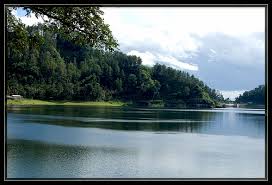
It is called Ngebel Lake because it is in Ngebel subdistrict territory. It is located about 24 km to the north-east of Ponogoro, Ngebel lake is in the slope of Wilis mountain with 734 metre height on the sea and the temperature 22 to 32 celsius.
With the wide of surface about 1.5 km, Ngebel lake surrounded by the road along 5 km. This lake has an amazing panorama, cool air with the maiden nature condition that kept one million potentials to be dug up. We also could met various fruits like: durian, mangosteens, pundung, etc. In the lake also spread various fishes, one them is the variety fishes that has protected. It is Hampala fish or the local inhabitants named Ngongok fish. For that purposes, it also available accommodation facilities that already for the visitor who want to spend the night. The facilities is managed by the Regional Government and private enterprise.
According to the developing legend in the community, Ngebel lake was formed based on the story of a dragon snake, named “Baru Klinting”.


When the snake take a meditating and unintentionally he was cut-piece by the community around to be eaten. Mysteriously the snake changed into a child who afterwards visited the community and made a contest to repeal the rib that was transfixed by him into the land. Not even one succeeded in carrying it out.

Afterwards he repealed this rib, and from this rib hole went out water that afterwards became the big pool that welled up and became Ngebel lake. It seems Ngebel lake had important role in the history of Ponorogo Regency, because one of the founders of Ponorogo regency, Batoro Katong, before doing the greatness Islam religion in Ponogoro regency had clear himself in a pool near to Ngebel lake. At this time, it is known as pool / Kucur Batoro.

Monday, 8 December 2008

Banda Island, Maluku

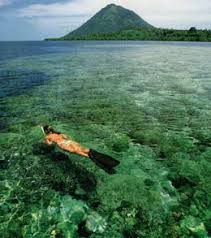
The Banda group, about 160 kilometers southeast of Ambon, consists of three larger islands and seven smaller ones, perched on the rim of Indonesia's deepest sea, the Banda Sea. Near Manuk Island, the water reaches more than 6,500 meters depth. Of the three biggest islands Banda, Banda-Neira and Mount Api, the first two are covered with nutmeg trees and other vegetation. The third however, is entirely bare and highly volcanic. The last eruption of Mt. Api occurred only a few years ago. The seas around Banda are the sites of the famous Maluku sea gardens with their bright corals and colorful fish darting through the crystal-clear waters. Facilities for sightseeing, snorkeling and skin-diving are available, as well as clean, comfortable cottages.


Banda saw some of the bloodiest episodes of Maluku's past history during the 17th century. In 1609, the Dutch East Indies Company (VOC) dispatched Verhoeff to the islands to obtain the contested spice trade monopoly at any cost. Confronted by a superior power, people Banda were forced to allow the company to establish a fort, but in that same year Verhoeff was killed together with 45 of his men. The Company retaliated, but peace was not restored. In 1619, V.O.C. Governor-General Jan Pieterszoon Coen arrived at the head of a penal expedition and exterminated the entire population of Banda. The land was divided into lots, called "perken”, and given to former company employees, the "perkiniers", who were obliged to grow nutmeg and sell them at predetermined prices to the company. Slaves did the actual work in the fields. The old "perkenier houses", or what is left of them, and old churches still retain a peculiar colonial character to the port town of Bandaneira today. Two old forts Belgica and Nassau are inside the town limits. Others are found elsewhere on the islands. See also the former Dutch Governor's mansion, the History Museum in Neira, and the huge nutmeg plantation nearby.

Sunday, 7 December 2008

Lovina Beach, Bali Island

Near the northern tip of the island of Bali lies a stretch of villages by the Bali Sea. Lovina Beach is the name. Lovina is really a string of coastal villages to the west of Singaraja. Escape from the hustle and bustle of Kuta to Lovina Beach located in north Bali, about 100 kilometers from southern tourist hotspots. It is well known as an excellent site for sunset watching, snorkeling, and diving. Darkly beautiful, Lovina offers quiet and calm, and is popular Asian tourists and those avoiding the hustle and bustle of the southern beaches. A number of coves offer tranquil, protected waters and Lovina is one of them. Although the sand is grey, it is quiet and peaceful, and popular among those who shun the glitzier beach resorts of the south. It is a popular place for dolphin watching; dolphins play in the water off Lovina. Famous for its early morning dolphin-watching boat trips, Lovina also offers good snorkeling and diving, and trekking in the nearby mountains. Diving off Menjangan Island, part of the Bali Barat National Park, is generally regarded as the best in Bali. Boats are readily available to take divers over to the island, where there are no residents or hotels.

Nightlife activities are also abound, as well as chartered boats to go out into the sea. If we like what Kuta offers but do not like the crowd. With a wonderful variety of hotels, restaurants and bars located on or very near the calm beach, Lovina offers something for everyone. It is also a good base to take day trips to the nearby attractions of north and west Bali.

Saturday, 6 December 2008

SOEKARNO GRAVEYARD

One of the tourist attractions in Blitar municipality is the tomb of Soekarno, an Indonesian proclamation reader and the first President of the Republic of Indonesia. It is located at 60 Slamet Riyadi Street, Bendogerit village, Sunan wetan district, about 2 kilometers from Blitar city.

The architectural "Joglo" dominates the tomb. It is in East Javanese style and combined with Gateway of Bentar. Beside the main building formed cover grave house of ‘Bung Karno’, this graveyard complx also completed with support building that is; Gapura Agung (The Great Gate), Mosque, and hall; which make the visitor feel comfortable to pilgrim in this location. There is also the complement building, consist of the grave manager house, public relax place, park area, and park. The impression is as great as the first president himself when he was still alive.

The tomb is visited by many pilgrims and opened for public. A lot of people come to visit at the time of memorial ‘Khol’ (the day of the death) of the Indonesia’s proclaim. The average of the visitors’ is amount to 150,000 per year, including both domestic and foreign visitors.

The great name of Soekarno invites the tourists to have pilgrimage tour to this graveyard. They feel astonished with the great president Soekarno, so that they pray in this graveyard to ask the benediction.

Tuesday, 2 December 2008

Imogiri, Yogjakarta

Imogiri is the official cemetery of the royal descendents from Yogyakarta and Surakarta. This cemetery located on a beautiful hill about 12 km from Yogyakarta. The royal graveyard is reachable by 345 stone steps leading to it. Imogiri is about 17 km Southeast of Yogyakarta and easily accessible by the bus of car. The tombs are built within three main courtyards. This Graveyard is the tomb of Sultan Agung Hanyokrokusumo, the third king of the Islamic Mataram Kingdom. All the kings of the Mataram Kingdom, from Sultan Hamengku Buwono I until Hamengku Buwono IX and their families as the Surakarta Kingdoms as well were all buried at the Imogiri Royal Cemetery.


This cemetery was built in 1645. Everyday many people visit Imogiri and step up on 345 stairs to reach the top of the hill where the tomb of the kings rested. Entry into the smaller courtyards housing the tombs of the princes is allowed, but the tomb can only be visited only on Monday 09.00 - 12.00 and Friday 13.00 - 16.00. The visitors must wear the traditional Javanese dress, which however can be hired on the spot at a modest fee. The cemetery is closed during the Moslem month of Ramadhan.

Sunday, 30 November 2008

Karimun Jawa Island

Karimunjawa is and island chain stretching in a northwesterly direction 83 km from Jepara. Central Java. This archipelago is a cluster of 27 islands in the java sea. Only seven of the islands are inhabited. The reefs are a mixture of fringing, barrier, and patch with bottom depths ranging from 15 to 40 meters. The name of Karimunjawa is taken from Javanese language 'Kremun kremun saking tanah Jawi' addressed by one of Wali Songo (the Nine Saints who had introduced Islam in Java) to describe how far this mini archipelago from Java, to be exact from Semarang and Jepara. Stands from 27 islands, this mini archipelago became marine national park and it's like a treasure for those who love marine life. Here can be found protected coral reefs (very colorful plateaus and plains in deep and shallow waters), secluded and tranquil white beaches, pelican and hornbill, sea grass and kinds of sea creatures, from crabs, anchovy, starfish, sharks, stingray, jellyfish, red snappers, etc.


The Marine National Park Karimun Jawa is 110,000 ha and lies 90 km north east of Jepara in Central Java. We will find mangrove forest and beach forest. The park is named after the largest island Karimun Jawa. The vegetation consists mainly of mangrove and beach forest, although there is some lowland rain forest on Karimun Jawa. Most of the islands are surrounded by sandy beaches and fringing coral reefs. Fresh water is confined to a few small wells and forest streams on Karimun Jawa. A number of endemic animals live on the island while on the beaches sea turtles lay their eggs. The average tidal range is 92 cm.

The archipelagic Karimunjawa, thought not as known the Marine reserves near Ambon and Manado, has unexpectedly good beaches, reefs and lovely sea scopes. Corals seem to blossom in to gardens, with an Amazing variety of form and color fishers and marine plants. It lies 90 km away from Jepara and can reached by "KM. Adison I & KM Kota Ukir" boat, the only ferryboat connecting Karimunjawa and Jepara. The resort offers stunning dives and snorkeling trips for all sorts of divers from novice to experience. Fringing reefs, atolls, wrecks and an excellent variety of different species make diving in Karimunjawa an unforgettable adventure.

Tanah Lot Temple, Bali

Tanah Lot is located about 12 kilometers from Tabanan City and 20 kilometers from Denpasar. The area comprises a wondrous mixture of natural beauty and sheer human effort. Here lies an idyllic white sand beach with crashing waves, complemented by a small yet majestic temple. This temple, known as Pura Tanah Lot, juts out to sea on a rocky background. Tanah Lot attracts throngs of both locals and tourists daily. Most come here longing to catch a glimpse of the romantic Tanah Lot sunsets, a regular occurrence during the dry season (April to November).

The royal Taman Ayun temple was built by one of the last priests to come to Bali from Java in the 16th century. The temple stands on the top of a huge rock, surrounded by the sea and is one of Bali's most important sea temples. Tanah Lot pays homage to the guardian spirits of the sea. Ancient rituals pay homage to the guardian spirits of the sea. Poisonous sea snakes found in the caves at the base of the rocky island are believed to be guardians of the temple, standing Virgil against evil spirits and intruders. At the base of the rocky island are poisonous sea snakes believed to guard the temple from evil spirits and intruders. The best time to see Tanah Lot is in the late afternoon when the temple is in silhouette.

Friday, 28 November 2008

Borobudur Temple, Central Java

Borobudur is the biggest Buddhist temple in the ninth century measuring 123 x 123 meters. It is located at Magelang, 90-km southeast of Semarang, or 42-km northwest of Yogyakarta. Borobudur temple is the one of the best-preserved ancient monument in Indonesia that are most frequently visited by over a million domestic as well as foreign visitors. It also had been acclaimed by the world as a cultural heritage main kind. The architectural style has no equal through out the world. It was completed centuries before Angkor Wat in Kamboja. Borobudur is one of the world's most famous temples; it stands majestically on a hilltop overlooking lush green fields and distant hills. Borobudur is built of gray andesite stone. It rises to seven terraces, each smaller than the one below it. The top is the Great Stupa, standing 40 meters above the ground. The walls of the Borobudur are sculptured in bas-reliefs extending over a total length of six kilometers. It has been hailed as the largest and most complete ensemble of Buddhist relieves in the world, unsurpassed in artistic merit and each scene an individual masterpiece.


Borobudur temple built in the eighth century by the Cailendra dynasty, is believed to have been derived from the Sanskrit words "Vihara Buddha Uhr" the Buddhist Monastery on the hill. Borobudur is a terraced temple surmounted by stupas, or stone towers; the terraces resemble Indonesian burial foundations, indicating that Borobudur was regarded as the symbol of the final resting place of its founder, a Syailendra, who was united after his death with the Buddha. The Prambanan temple complex is also associated with a dead king. The inscription of 856 mentions a royal funeral ceremony and shows that the dead king had joined Shiva, just as the founder of the Borobudur monument had joined the Buddha. Divine attributes, however, had been ascribed to kings during their lifetimes. A Mahayana inscription of this period shows that a ruler was said to have the purifying powers of a bodhisattva, the status assumed by the ruler of Shrivijaya in the 7th century; a 9th-century Shaivite inscription from the Kedu Plain describes a ruler as being "a portion of Shiva."

The Borobudur was in danger of collapsing as its stone statues and stone cancer, moss and lichen affected bas-reliefs. But, the monument has been completely restored and was officially opened by the President on 23rd February 1983. The restoration took eight years to complete, funded by the Government of Indonesia with aid from the UNESCO and donations from private citizens as well as from foreign governments.

The visitors have the option of going by taxi or public bus to reach this temple. Public transportation is available from the bus terminal. From that point visitors can hire becaks or horse carts, or walk the rest of the way to the monument. A large parking area is available not far from the monument, so private cars and buses can park in this are

Tuesday, 25 November 2008

Mount Bromo, East Java

This National Park is one of the most beautiful places of interest in East Java. The beauties of mountain covered, give a special and characteristic green plants, arousing great interest.

Tenggerese traditional farming also makes this famous place being more interesting and attractive. In addition, cool and breezy wind always blows freshly giving ever visitor special deep impression a unforgettable memories.

The accessibility has no problem and very reachable (via Malang, Pasuruan, Probolinggo or Lumajang).
Surely, different access give different characteristics scenery landscape. The elevation reaches about 2.392 meter sea level above and the temperature varies from 3 up to 20 degrees centigrade.

Facilities: Star Hotels, home-stays, restaurants, and many others that visitors needed can be found.
The people who live in this area are supposed to be descended from Majapahit Kingdom about six hundred years ago. The belonged to Tenggerese Hinduism with old traditional. That tradition still survives up to now. Every year, they always carry out the traditional and religious ceremonies, and the most popular ones is Yadnya Kasada, an offering ceremony held at the edge of the crater on the top of mount Bromo.


The Story of Offering Kasada Ceremony

Hundreds years ago, during the reign of the last king of Majapahit, Brawijaya, the situation was so uncertain due to the expanding new religion, Islam. At the time, the queen gave birth a baby girl and named her Roro Anteng, later the princess married Joko Seger, a Brahma Caste.

Since the influences of the new religion was so strong that it created chaos. The king and his followers were forced to back off to the east, some of them reached Bali and some of them reached a volcano.

The new married couple, Roro Anteng and Joko Seger were also found among the fugitives who went to the volcano. Later they ruled the volcano area and named it Tengger. The word Tengger was derived from Roro Anteng and Joko Seger. Then he surnamed himself the riffle of Purba Wasesa Mangkurat Ing Tengger which means the righteous ruler of Tengger.

Years after year as the region flourished in prosperity, the King and Queen felt unhappy for they had no children to succeed their throne. On their desperation, they decided to climb the top of the volcano to pray and beseech before God, the Almighty. Deeply, impressed by the faith of their meditation affected the murmuring sound of the crater lifted up miraculously followed by a golden lightning that made the surrounding locked so scintillating. Their prayer were heard the God and would give them children, but they should sacrifice their last child as return. It was a promising future that could not be denied.

Not long after, the first baby boy was born and Roro Anteng named him Tumenggung Klewung. Child after child was born during the years and it reached 25 in number to whom she gave the named Kesuma for the last child.

Roro Anteng and Joko Seger were very happy ever since, love and affection were imparted among their children. Happiness lingered on years after years, but a dull and sad feeling still haunted them for their promise would be claimed one day. They realized that they could not run from the fact, a bitter disappointment of losing a child shot through their brains. The day came, the God reminded them of their promise which could not be avoided.

As they felt how cruel it was to sacrifice their beloved child, they decided to break their promise by not offering him to the God. They brought away their children in order to save their last child from the offering. They tried to find a place to hide, however, they could not find away.

All of by sudden, the dreadful eruption of the volcano followed to where they went and miraculously Kesuma, the last beloved child was swallowed into the crater. At the same time when Kesuma disappeared from their sight, turbulent brawl diminished and strange silence for a while but a sudden voice echoed: Hi, my beloved brothers and sisters. It was sacrificed to appear before God Hyang Widi Wasa to save all of you. And what I expect be in a peace and live prosperously. Don't forget to set mutual assistance among you and to worship God constantly to arrange an offering ceremony annually on 14th of Kasada (the twelfth month of Tenggerese calendar) by full moon. For the sake of your God. Hyang Widi Wasa.

Kesuma's Brothers and sisters held the offering ceremony annually just like what Kesuma advised and it was held from generation to generation up to now.

Bandealit Beach, Jember East Java

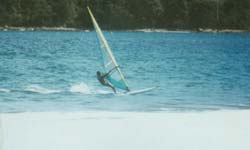
Bandealit is a beach resort situated in the forest area 35 km south of Jember. Nearby Bandealit, there is Sukamade Beach, Banyuwangi regency, which is the place of breeding sea turtles. This beach is famous for the calm waves and the beauty of the flora. Bandealit is very suitable for the visitors who like off-road activities because the road to Bandealit is difficult to travel. In Bandealit the visitors can hike, fish and windsurf. This beach often visited by the sea adventurous who like the challenges. The visitors can reach Bandealit by truck or rental car in 90 minutes from the central town.

Friday, 21 November 2008

Moyo Island, West Nusa Tenggara

Moyo Island, at the mouth of Saleh Bay, has a nature reserve with wild oxen, deer, wild boars and a great variety bird species. Visits are best made during the dry season from June through August. A few kilometers of the north coast of Sumbawa, the national park island of Moyo Island is probably the most rewarding destination in Sumbawa, surrounded by beautiful coral reefs and home to wild pig, monitor lizards, 21 species of bat, huge herds of native deer and hordes of crab-eating macaques. The best time to visit is in June and July, though the seas are clear and quiet from April. There are basic private rooms at the PHPA post at Tanjung Pasir on the south coast, where most boats from the mainland arrive. Renting a fishing boat from Tanjung Pasir and going fifteen minutes east to Stama reeft is very rewarding, with lots of sharks and turtles. There's nowhere on Moyo to rent masks and snorkels so bring our own; fins are advisable due to the strong currents.

To get to Moyo, take a bemo from beside Seketang Market in Sumbawa Besar to Air Bari , a small port settlement to the northeast. From Air Bari, we can charter a boat to Moyo.

National Parks of Indonesia: Moyo Island Reserve

Further along Nusa Tenggara to the east of Lombok lies Moyo Island and its Reserve. A fantastic place to visit and is a place of adventure.

Moyo Island is an attractive island three kilometres off the north coast of Sumbawa, lying to the east of Lombok. Two thirds of Pulau Moyo is actually a game reserve. The central plateau with its grassy savannah land and intermittent forested areas is ideal for Deer as well as the feral cattle released there.

The coastline has some beautiful beaches of fine coral sand and not the black volcanic sand like we find on a lot of islands in the archipelago. There are beautiful coral reefs, which make it excellent for scuba diving or just snorkeling. The reef at the southern end of the island is probably the best of all.

There are a few inhabitants on the island and this consists of around 21 villages concentrated in the northern end. From Moyo there are splendid views of Mount Tambora (2,821m) to the east, the highest mountain in Sumbawa, which erupted quite violently in 1815 but now has amazingly beautiful forests on its western slopes.

Tambora can be climbed from the side in three days and is well worth a visit. It has an enormous crater and within, a two-colored lake. From the crater there are also spectacular views over Saleh Bay and the rest of Sumbawa to the east, and to the west, Moyo Island to Lombok and Mount Rinjani.

The wildlife on the reserve has adapted to the fairly dry habitat and these include Deer, feral cattle, and numerous birds such as Orioles, Sunbirds, Coequals, Koels and Drongos. Of course there are several species of shore birds along the coastline. 

Saturday, 25 October 2008

Bali Island

Bali Island, the perfect holiday destination for all ages offers something for everyone. Bali offers not just various customs but also various "adrenalin pump" parks. Many exciting amusements are available in Bali, with something new opening all the time. The number of offshore and inland attraction are on the rise because many tourists want them. This tropical paradise has a unique blend of modern tourist facilities combined with wonderful shopping and a rich past and heritage. After white water rafting that has gained popularity in Bali, comes offshore rafting or ocean rafting. The more adventurous sort of amusement has now become an alternative sport for tourists. Meanwhile white water rafting is still a popular activity with trips on Ayung, Telaga Waja, Unda Rivers, etc. The tourists can refresh their mind by watching beautiful scenery along the route. Those are not enough, some of the best surfing beaches in the world can be found on the western side of the island whilst conversely the eastern side is a wonderful haven for families, with beautiful white sand beaches and gentle seas.


Bali is small island, just 140 Km by 80 Km and lies between Java, the most highly populated and influential of all the islands, and Lombok, one of the quieter and moderately slower paced islands. Like many islands, Bali has developed a world of its own. It not only captures what is special about Indonesia but also has a uniqueness of its own.


The culture of Bali is unique. People say that the Balinese people have reached self-content. The Balinese people are proud of having preserved their unique Hindu culture against the advance of Islam, the dominant religion throughout Indonesia. This is still reflected in days to day life and can be seen in the numerous ceremonies, Balinese festivals and magnificent temples and palaces. The Balinese are skilled artisans, particularly in woodcarving and in fashioning objects of tortoiseshell and of gold, silver and other metals. The Balinese are noted for their traditional dance, the distinctive music of the gamelan and for their skills in weaving cloth of gold and silver threads, Songket, as well as for embroidering silk and cotton clothing. Stone and woodcarvings, traditional and modern paintings and intricately designed jewelry in gold and silver are readily available in shops and galleries throughout the island.
As for recreation, there is no shortage of options. Nature walks, horseback riding, diving, surfing - even bungy jumping and white water rafting - await the adventurous here.

Monday, 20 October 2008

Bunaken National Park, North Sulawesi

A flat island about 15 km from Manado, with a friendly people. The coral reefs off Bunaken island shouldn't be missed while you are in Manado. These magnificent virgin reefs are still relatively unspoiled. The drop-off walls at Liang cove is not only rare in the world, with caves, gullies and caverns, harboring an immense wealth of marine life. Spectacular formation of reefs begin with flat at about 5 m depth. These plunge downward to form underwater vertical crevices with often reach depth on several hundred meters. On these beautiful reefs, a wonderful collection of marine life thrives.

The Bunaken reef is a chain of over 40 five star dive spots. The Marine Park is spectacular with the greatest concentration of tropical fish, coral species and world famous wall diving.
Clear, warm waters (sea temperatures usually range between 27-30 degrees C), light currents and calm seas allow easy access to the underwater attraction awaiting visitors to the five-islands of the Bunaken-Manado Tua National Marine Park which sits directly offshore of Manado. Bunaken is the standout favorite, with the highest density of schooling fish and the greatest probability to see larger species such as turtles, sharks, and napoleon wrasse. There are enough sites here to keep any diver happy for over a week without going elsewhere.

Getting There

Bunaken Island is easily reached from Manado by motorized outrigger boat start from Manado harbor, Molas, Kalasey and Tasik Ria beaches. The public boats from Manado to Bunaken are leaving daily around 2 p.m (depending on tide), except Sundays, from Pasar Jengki near Manado harbor. Back from Bunaken to Manado usually early in the morning, around 7-8 a.m

Where to Stay

On the island you have the choice amongst a number of homestays, with rates starting at
Rp. 40 000 per day and person including full board. Some of the dive operations on Bunaken are offering more up-market accommodation, and even running water.

Moving Around

You can explore the land on foot. And you can use a boat to move from one dive sites to another sites.


Dining Guide

There are several of restaurants and cafes throughout Manado and the islands. Try their specialties: seafood, bubur manado and food made of coconuts!

Other Things to See or Do
  • Diving, swimming, and snorkeling.
  • Walking around on the beach.
  • Sampling the tempting seafood cuisine.
  • Ornithologists and amateur bird-watchers might find visiting Tangkoko Dua Sudara Nature Reserve entertaining.

The overlooked attractions of Central Java's north coast

The gunpowder smell of fresh rain in the night air hit me as I climbed down from the train in Semarang. By the time I reached the station gates and had clambered into a waiting becak (pedicab), a thunderous -- and highly unseasonable downpour had begun.

I peered from beneath the becak's dripping hood as it rolled along the empty streets. This was an old city, and I caught glimpses of heavy Dutch rooflines, crumbling columns and arched windows. Shadowy figures sheltered beneath shuttered balconies, and other becaks rolled swiftly through the wet night, their drivers straining urgently at the peddles.
I stopped at the only place open on this dark street: a caf* in a high-ceilinged old building with slow-circling fans. The walls were decorated with photographs of Semarang in years past, and the caf* was known simply as "No. 29" (opposite Blenduk Church). I ordered a plate of juicy sate and a glass of iced tea, and sat peering out at the wet darkness. The rain continued to fall.

Semarang is not high on any must-see list for travelers. Overshadowed by its southern counterpart, the touristic behemoth of Yogyakarta, it's easy to forget that this coastal city of 1.5 million people is the capital of Central Java, and one of the oldest settlements in Indonesia.

With a couple of days to spare I had decided to eschew the more obvious attractions of Yogyakarta to see what this lesser-known place and its surrounds had to offer -- if only it would stop raining!

Colonial history, Chinese culture

To my relief, the dry season returned the following morning. I picked my way over the puddles back into the old part of the city -- still sometimes known by its Dutch name, the Outstadt.

While Yogyakarta is a truly Javanese city, Semarang is the archetypal port, built on colonialism and immigration.

Semarang's history can be traced back to the first millennium -- ancient by Indonesian standards -- but it was in the colonial era when trade networks spread from the harbors of Java that it came into its prime.

The ruler of the ailing Mataram kingdom, Amangkurat I, ceded Semarang to the Dutch in 1677 after they came to his aid against the Madurese renegade Trunajaya. Semarang soon developed into a seat of colonial government and commerce.

The loudest echoes from this era can be felt around Jl Jendral Suprapto, the street that my becak had rolled along through the rain the previous evening.

The atmospheric gloom had cleared with the dawn, but what had been ominous silhouettes in the wet darkness, now revealed themselves as fine 18th and 19th Century buildings.

This was an area of hipped roofs, stocky columns and some of the finest Dutch domestic architecture I had seen in Indonesia. Best of the colonial buildings was Gereja Blenduk, the domed Church of Immanuel opposite the caf* where I had eaten the night before. Built in 1753, it is still one of the most important Protestant churches in Semarang.

Its heavyset white clock towers and red brick dome were bright against a clear blue sky.

Wandering along narrower alleyways south of the church, I found my way to the edge of the river that once carried trading ships into the very heart of the city. This was an area of tiny doorways and outdoor kitchens. Fighting cocks preened themselves haughtily under wicker baskets and finches twittered in bamboo cages hanging from trees.

I followed the river south to the 18th Century Tay Kak Sie Chinese temple. It is an impressive building with dragons writhing along its bowed roofline. Inside, old ladies raised bunches of smoking joss sticks before the altars while old men with bony knees sprawled on benches outside. The air was thick with the heavy scent of incense.

Semarang has a large ethnic Chinese population. There is a suggestion that the name of the place may be a corruption of that of the famous Chinese Admiral Zheng He, who came here in the 15th Century and to whom another temple on the outskirts of the city is dedicated.

Across the river I wandered into Chinatown. Here there were old shop-houses and more temples at unexpected street corners. Flashes of red and gold showed above the counters of pharmacies and hardware stores.

Semarang's modern center lies to the south of all this history, focused on the broad expanse at the heart of Simpang Lima, a five-road intersection lined with hotels and malls.

Shopping is not my scene, so after tracking down an edible souvenir, the local speciality known as wingko babad -- small, sticky coconut-flavored cakes -- I retreated north and took refuge in another relic of the colonial age.

Toko Oen is a venerable institution, a restaurant that has hardly changed since it opened its doors in 1936. The heat and traffic noise seemed to stay respectfully outside and four superannuated Chinese women sat dabbing at homemade ice cream at a table near the door. I slipped into a creaking wooden chair and settled down to read the newspaper over coffee and cakes.

Hindu temples at high altitude

The next morning I headed for the hills. Yogyakarta may have Borobudur, but Semarang has its own classical temples within easy reach of the city.

A battered local bus carried me south. Ahead, the ghostly outline of Gunung Ungaran formed like a photograph from the haze, and soon we were rattling along a rising road through green forests. Just beyond the little hill resort of Bandungan, 45 minutes from Semarang, I left the bus and took a motorbike taxi up a narrow lane through fields of cabbage and potatoes, into the clouds.

It was a weekday afternoon and the cool hamlet of Duran, 1200 meters above the sizzling coastal plain, was deserted. I left my bag in a little caf* on the edge of an empty car park at the end of the road, and made my way uphill to the temples of Gedong Songo.

Strung out among the pine trees and terraces above Duran, these 8th Century Hindu temples have a truly stunning location. And as the light faded and skeins of damp mist crept down the high slopes, I was the only person there to enjoy it.

Gedong Songo means "nine buildings" in Javanese, something that may puzzle modern visitors: There are only six distinct temple groups. It is said that the name has its origins in the dubious counting skills of early Dutch surveyors who ignored the more evocative local name: Candi Banyukuning, Temples of the Yellow Water.

These finely decorated temples were dedicated to the worship of Shiva. Bug-eyed demons grimaced above entranceways and naga or dragons flanked the steps. In the wall, niches carvings of Ganesh (Shiva's elephant-headed son) and the goddess Durga had survived, all with swollen bellies and tilted hips.

Inside the empty inner chamber of one the buildings, a small pile of petals and a curl of incense ash showed that someone was still venerating these places.

I picked my way along the white stripe of the footpath, zigzagging through the forest. The valley below had disappeared under smears of bruised cloud and the pine trees hung limp in the damp air. There was a faint odor of sulfur. I found its source -- and that of the temples' old name -- at the bottom of a narrow ravine where smoke was issuing from the cracked rocks, and steaming water was bubbling in shallow, yellowish pools.

There was a small bathing pool here where the geothermally heated water was at perfect bath temperature for this cool climate. After a relaxing dip I hurried downhill and found a clean, quiet guesthouse in the village.

Mountain vistas at dawn

A crimson stain was seeping along the eastern edge of the morning as I hurried uphill at first light. The blue mist of the evening had gone and the only mark on the slopes was the sulphury smoke from the hot springs.

It was cold and I kept moving swiftly until I reached the temple on the highest ridge. Shards of sunlight were spilling across the mountainside now and a warming breeze was lifting from the valley.

A sea of pale cloud all but covered the landscape of fields and forests below, but I could just pick out the faded mirror of Rawa Pening Lake away to the south. Beyond it, rising in a smooth purple cone was the high summit of Gunung Merbabu, and peering over its western shoulder, trailing a smudge of pale smoke, was the belligerent peak of Merapi. To the west another pair of high volcanoes -- Sumbing and Sundoro near Wonosobo -- were slipping away into the rising morning.

Semarang might not have a kraton (palace) or endless reams of batik, but it has palpable relics of another side of Javanese history. And if the dignified remains of the Gedong Songo don't match the giddying splendor of Borobudur, they do occupy one of the most stunning locations in Java.

As I sat there, alone and untroubled, the warmth of the new sun on my face, the sound of insects creaking in the forest, I thought of the hordes of sweating sightseers that would already be swarming up the steps of Borobudur, just 50 kilometers to the south. I was glad that I had come here -- and it had stopped raining.

Ijen crater, a perilous beauty

Behind the beautiful panorama of Mount Ijen, with one of the world's largest craters, in Bondowoso, East Java, lies a health hazard to the surrounding community.
At least 50,000 people live in an area threatened by acidic water from the crater lake permeating through their wells.

Badawi, 45, a sulfur miner at the crater -- better known as Kawah Ijen -- savored a cup of coffee at a food stall in Paltuding village, Bondowoso regency, before setting off to work.

Beside his coffee cup stood a bottle of water from a well to drink on the 4-kilometer hike to collect sulfur from the crater.

"People say the well water is toxic because of acid from the lake. But most residents, including myself, don't care about the effects of the water, as we have so far remained healthy.
Research conducted by Soegijapranata Catholic University, Semarang, Central Java, in 2007 showed that acid water in the crater lake had infiltrated and contaminated surrounding rivers and wells. As a result, local people were affected by tooth decay and bone degeneration, while agricultural production was reduced.

As many as 3,564 hectares of paddy fields have been irrigated with polluted water, affecting 50,000 villagers across three regencies.

A report from Soegijapranata University said that most residents around the Banyupahit and Banyuputih rivers had been informed of the dangers of contaminated water.

The study, which was supported by Holland's Untrecht University, Netherlands Open University and the Vrije University of Amsterdam, showed that the acidic water of Kawah Ijen had caused many people to suffer from dental fluorosis, a condition caused by an excessive intake of fluoride in drinking water.

In a discussion at the 10 November Technology Institute of Surabaya (ITS), head of the Vulcanology and Geological Disaster Mitigation Center, Surono, said the consumption of lake water infiltrated through the wells caused abnormal human growth and shortened life expectancy. He made a recommendation to the East Java governor and local authorities to build a tunnel channeling the crater stream to the sea, 42 kilometers away. He has yet to receive a response.

For both local and foreign tourists, Kawah Ijen is a unique attraction. It is one of the few volcanoes in the country that has a crater lake. Of the country's more than 700 mountains, only a small percentage have such lakes, including Mount Rinjani (3,726 meters above sea level) in Lombok, West Nusa Tenggara, and the Kelimutu range in Flores.

Visitors are prohibited from approaching the crater, where a lava dome has emerged as a "mini Kelud", measuring 700 square meters, with a 130-meter diameter.

According to vulcanologists, the Kelud dome is a unique phenomenon in Indonesia's volcanic history and still has the potential for a devastating eruption.

Kawah Ijen is easily accessible by motor vehicle -- the best route is via Bondowoso and eastward through Wonosari to Sempol village and finally via Paltuding village. This route covers 70 kilometers of smooth asphalt roads. It can also be reached through the town of Banyuwangi -- only 38 kilometers to the west of the villages of Licin, Jambu and Paltuding -- but the roads are quite steep.

For a morning climb, tourists can spend the night at the coffee estate guest house of PTP Nusantara XII state company in Kalisat, Jampit, at an altitude of 1,200 meters. A tourist inn, Pondok Wisata, also offers accommodation in Paltuding, besides a camping ground. Masks, glasses and wet handkerchiefs are needed for protection against toxic fumes from the crater. By following the path worn down by sulfur miners, climbers will not get lost.

At the peak, a green crater can be observed at a height of 2,368 meters above sea level, with a total area of 5.5 hectares and caldera walls 300 to 500 meters high. The lake's water, totaling 200 million cubic meters in volume, can reach 200 degrees centigrade. With a depth of 200 meters, the lake is so acidic that it can dissolve clothes and human fingers.